
Blog
IEEPA Tariffs Struck Down: Why Waiting for Liquidation May Undermine Refund Claims
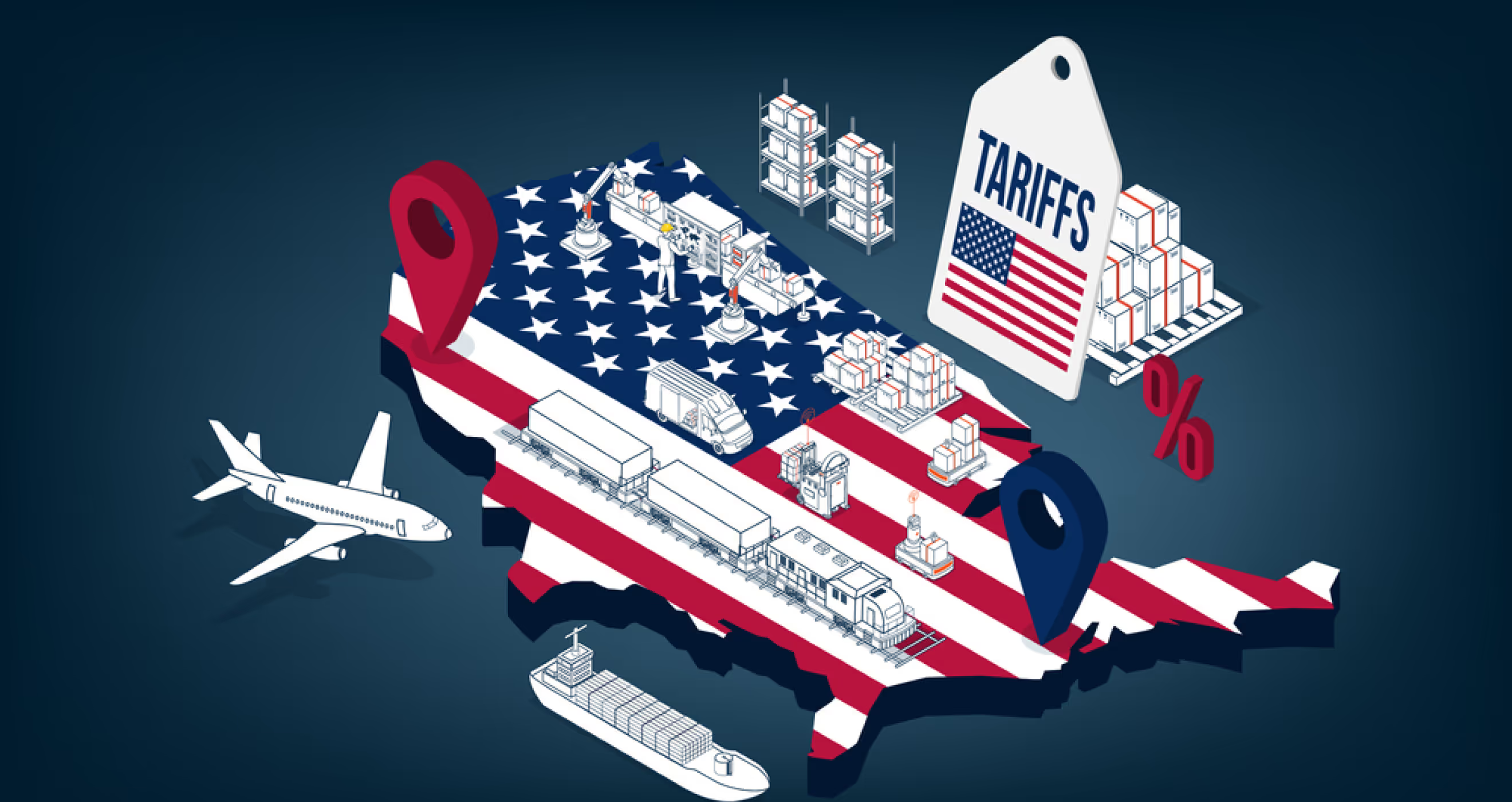
The Supreme Court’s decision in Learning Resources, Inc. v. Trump removed the legal foundation for the sweeping tariffs imposed by the President under the International Emergency Economic Powers Act. For importers who paid those duties, the ruling creates a significant opportunity to seek refunds. What it does not create is an automatic repayment process.
Customs law operates through a structured entry and liquidation system. When merchandise enters the United States, duties are assessed and later liquidated—meaning the amount owed becomes final unless it is properly challenged. After liquidation, an importer generally must file a protest with U.S. Customs and Border Protection within 180 days. And only after the protest is denied—or is deemed to have been denied by operation of law—may the importer seek review in the U.S. Court of International Trade.
If an importer waits for liquidation, its path is confined to the protest process before it can obtain judicial review. That can create delay, stagger deadlines across multiple entries, and fracture what might otherwise be a unified refund strategy. There is another approach.
For unliquidated entries, importers may seek relief directly in the Court of International Trade before liquidation occurs. Acting pre-liquidation can preserve claims across multiple entries at once and place the legality and remedy issues directly before a court. It can also avoid the risk that different liquidation dates produce inconsistent or piecemeal recovery efforts.
Litigation is already underway in the wake of the Supreme Court’s ruling. That procedural reality underscores a practical point: the refund question is not merely administrative; it is now a matter of timing and litigation posture. Importers should therefore evaluate:
- Which entries remain unliquidated;
- When liquidation is expected to occur; and
- Whether immediate judicial action is necessary to preserve recovery.
Once liquidation occurs, the statutory framework narrows. Acting beforehand preserves flexibility.
The Supreme Court answered the authority question. The remaining issue is how, and how quickly, importers position themselves to recover what was unlawfully collected. In this environment, waiting for liquidation may mean surrendering strategic advantages that are available today.
Contact our team today at (602) 649-3887 or fill out our form for a consultation to ensure your right to a refund is preserved before the 180-day window closes.